
Pumping shouldn't hurt. And the flange size that came with your breast pump might not be right for you.
If you're experiencing nipple pain, swelling or low milk output when expressing breastmilk, your breast pump flange (also called a breast shield) could be contributing.
Many breast pumps come with “standard” 24 mm flanges, but newer research suggests that smaller, individually fitted sizes may improve both comfort and milk removal.
I recommend fitting your flange size before your baby arrives.
What does the latest research say about flange sizing?
A 2025 study published in the Journal of Human Lactation, co-authored by Jeanette Mesite Frem, IBCLC, of Babies in Common, compared traditional flange sizing with a newer, individualised fitting approach.
Researchers found that participants using smaller, individually fitted flanges experienced:
An average of 15 g more milk per pumping session
Significantly better pumping comfort
Effective milk removal with flange sizes smaller than traditionally recommended
The most common smaller-fit sizes were 15 mm and 17 mm.
While this was a small pilot study, the findings challenge the traditional recommendation to automatically add several millimetres to your nipple measurement.
The takeaway? Bigger isn't necessarily better, and the right flange size is individual.
How to measure your breast pump flange size
Rather than automatically adding 2–4 mm to your nipple measurement, start with a measurement close to your nipple diameter.
Gently stimulate your nipple so it's naturally erect.
Use a nipple ruler to measure the diameter of your nipple tip, not the surrounding areola.
Start with a flange close to your measurement.
Trial nearby sizes while pumping, paying attention to comfort and milk flow.
For example, if your nipple measures 16 mm, you might trial 15 mm, 16 mm and 17 mm flanges to find the most comfortable fit.
Measure both nipples. It's common to need different flange sizes for each breast.
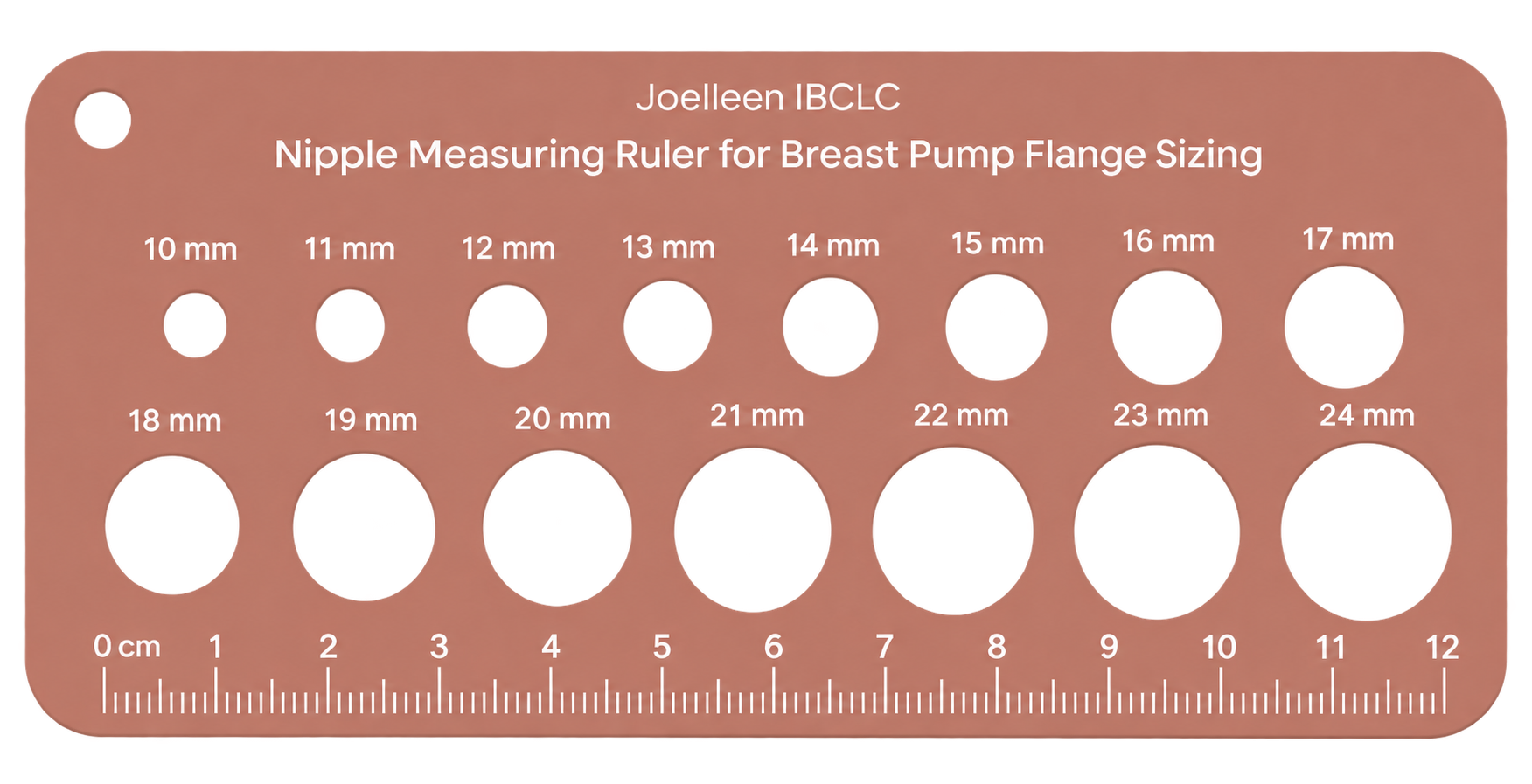
A nipple ruler measuring tool, can help you establish your starting measurement before trialling different flange sizes. I use a nipple ruler during a consultation to help clients understand what sizes may be best to start with.
Signs your breast pump flange may be too big
Your nipple or areola is pulled excessively into the tunnel
Your nipple becomes swollen or uncomfortable
Milk leaks around the flange
Milk flow is poor despite regular pumping
You need unusually high suction to express milk
Signs your flange may be too small (less likely)
Your nipple cannot move comfortably within the tunnel
Pumping causes pinching, rubbing or pain
Milk flow is reduced
Your nipple becomes compressed or damaged
These symptoms aren't always caused by flange size alone. Suction settings, nipple positioning and other breastfeeding concerns can also contribute.
What does a good flange fit look like?
The right flange should:
Feel comfortable throughout pumping
Allow your nipple to move without painful friction
Support effective milk removal
Leave your nipple comfortable after expressing
Some gentle contact between the nipple and tunnel walls can be normal. You don't necessarily need a visible gap.
Comfort and milk output matter more than the number printed on the flange.
If you're already pumping comfortably and removing milk effectively, there's no need to change sizes simply because smaller flanges are becoming more popular.
It’s also worth noting that nipple size can fluctuate during pregnancy - feeding/pumping journey - so remeasuring from time to time, especially if there are changes in comfort and/or output will be helpful.
Need help choosing the right flange or breast pump?
Finding the right flange size is only one part of comfortable, effective pumping.
Choosing a breast pump that suits your needs, understanding suction settings and knowing how often to express can make a significant difference.
As an IBCLC Lactation Consultant, Midwife and Naturopath, I provide personalised guidance on:
Measuring your nipples and choosing the right flange size
Selecting a breast pump for occasional, regular or exclusive expressing
Improving pumping comfort and milk removal
Managing nipple pain and concerns about milk supply
Creating a pumping routine that works for you and your baby
Book a breastfeeding consultation at my Moonee Ponds clinic in Melbourne or online, wherever you're based.
Generally, I recommend the LACEVO s70* wearable breast pump - this company has been size/fit forward from day one, and comes with a sizing kit when you purchase the pump. You can measure your nipples and size up or down with their range of inserts. Use code JWPCARE to save 15% off.
Breast pump fitting and hire in Melbourne
For Melbourne parents wanting to trial different flange sizes in person or hire a breast pump, I also recommend Nurturing Flow.
Nurturing Flow offers specialised breast pump flange fittings, pump hire and personalised pumping support.
References and further reading
Anders, L. A., Mesite Frem, J., & McCoy, T. P. (2025). Flange Size Matters: A Comparative Pilot Study of the Flange FITS™ Guide Versus Traditional Sizing Methods. Journal of Human Lactation, 41(1), 54–64. https://doi.org/10.1177/08903344241296036
Babies in Common. The Flange FITS™ Guide.
Australian Breastfeeding Association. Choosing a breast pump.
*Denotes an affiliate link. I may earn a small commission on qualifying purchases, at no additional cost to you. I'm highly selective about the products I personally use and recommend to my clients and community. Affiliate earnings help support the time, research and resources that go into providing thoughtful, evidence-informed recommendations. I only recommend products I genuinely trust.
